
The 8th Geography of Innovation (GeoInno2026) conference took place from 28 to 30 January 2026 at the Corvinus University of Budapest, co-organised by the ELTE KRTK. Following cities such as Saint-Étienne, Utrecht, Toulouse, Barcelona, Stavanger, Milan, and Manchester, Budapest became the first city in Central and Eastern Europe to be included on the prestigious list of venues for this biennial conference.
The primary objective of the conference has been to gather leading scholars and researchers from diverse fields, including economic geography, regional science, economics, sociology, network research, political science, and planning science. This conference is particularly notable for its origins as a grassroots research initiative and has since established itself as the premier European platform for professionals engaged in the study of innovation geography.
László Kollár, Secretary General of the Hungarian Academy of Sciences, emphasised one of the main missions of the Geography of Innovation conference. At the opening reception, he welcomed the attendees on behalf of the 200-year-old institution and, in his speech, highlighted that researchers have a great responsibility to ensure that innovative solutions truly serve the interests of the people.
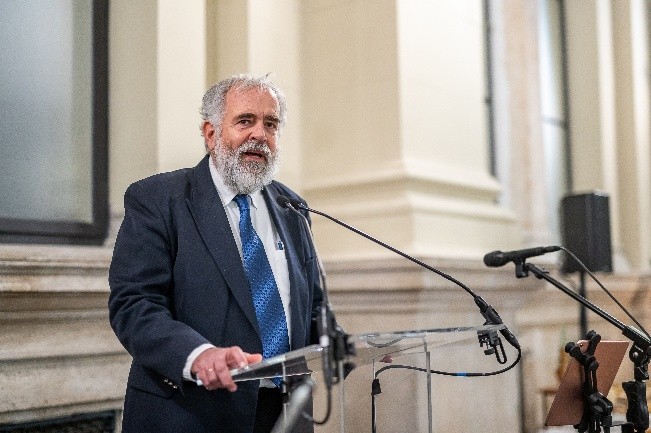
He highlighted two key tasks in this regard: researchers must map out how scientific and technological developments fit into different areas of life, and they must remain ethical throughout the process of scientific and technological progress.
Three plenary lectures were given at the conference (the organisers had originally planned four, but Lars Coenen, professor at the University of Western Norway in Bergen, was ultimately unable to deliver his lecture).
Beata Javorcik, professor at the University of Oxford and chief economist at the European Bank for Reconstruction and Development (EBRD), spoke about the impact of sanctions against Russia on international trade from different perspectives and outlined how the sanctions triggered processes that differed from expectations.
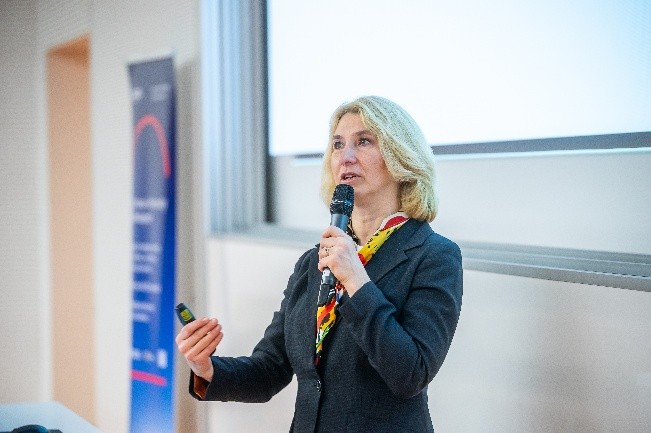
Luisa Gagliardi, associate professor at Bocconi University in Milan, gave a presentation on the micro-geography of entrepreneurial activity, showing which socio-economic factors influence the spatial distribution of entrepreneurial activity within a city. This approach helps to understand how innovation and start-up hubs develop within cities and what key factors shape urban entrepreneurial ecosystems.
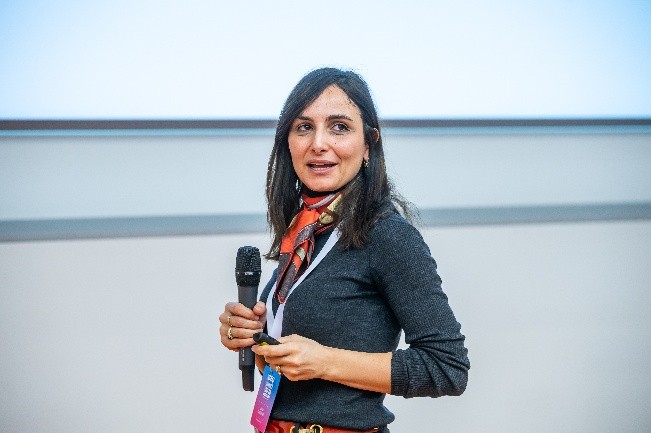
Lee Fleming, professor at the University of California, Berkeley, illustrated the mechanisms of Marshall’s theory of agglomeration externalities through the presence of patent inventors, their geographical distribution, and their relationships, focusing on causality in networked knowledge spillovers. Reflecting further on the uneven geographical distribution of inventors, he pointed out the advantages and, in some cases, disadvantages of the concentration of inventors in terms of the number and values of the patents.
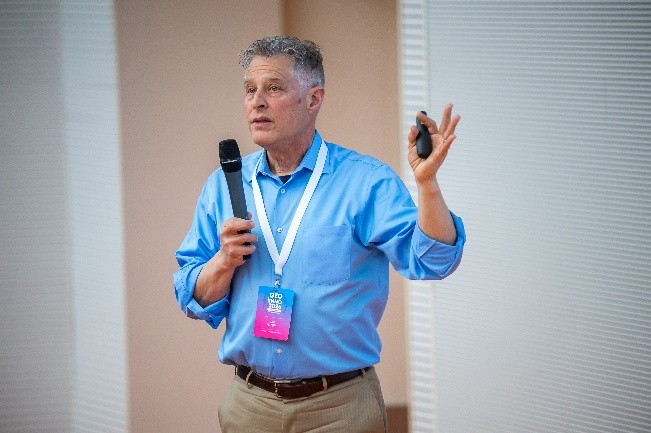
In addition to the plenary presentations, the conference’s three panel discussion sessions also attracted a large audience. The first discussion focused on strategic autonomy and industrial innovation, illustrated with examples from invited speakers across Europe and the world. The second discussion examined the role of artificial intelligence in innovation, with the participation of not only researchers but also representatives from the private sector and innovation institutions. The third panel on the closing day discussed the downsides of innovation. The participants emphasised that although most studies focus on the positive socio-economic effects of innovation, it is also important to highlight the potential risks and downsides.
Another popular program was a workshop hosted by ELTE KRTK. As a prelude to the conference, the event focused on the emerging field of innovation geography research and the potential applications of artificial intelligence-based research tools and technologies. The workshop, organised by Sebastian Schmidt (University of Salzburg), Milad Abbasiharofteh (Aalborg University), and Johannes Dahlke (University of Twente), attracted considerable interest.
Over the two-and-a-half days of the conference, 345 presentations were given in parallel sessions. At a meeting organised with publishers, participants had the opportunity to hear presentations on 11 journals related to the conference. A touching moment at the gala dinner was the presentation of the young researcher awards created in memory of Professor Attila Varga, one of the initiators of the Geography of Innovation community, who passed away in 2023. The award committee selected three doctoral students whose papers were ranked the best (in order of ranking: Giacomo Lo Conte, Nils Rochowicz, and Andreea Toiu).
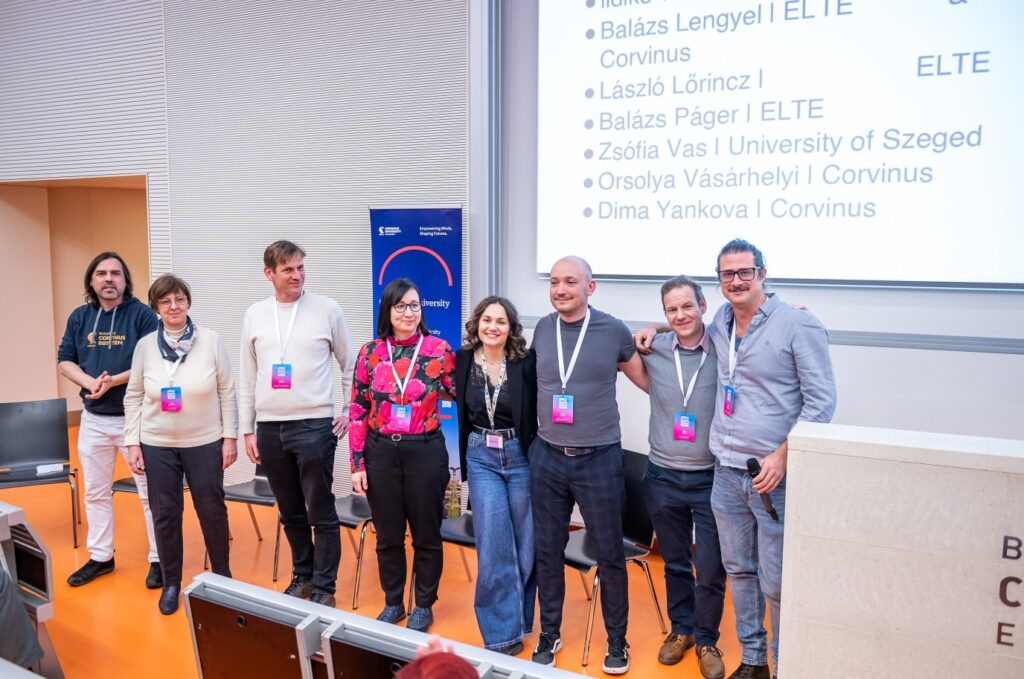
Several ELTE KRTK colleagues gave presentations at the conference and organised thematic sections. Balázs Lengyel was the head of the Local Organising Committee (LOC), while Balázs Páger led the Program Committee. The members of the LOC included Zoltán Elekes, László Lőrincz, and Ildikó Kelemen from KRTK; Veronika Hamar, Cesar Hidalgo, Orsolya Vásárhelyi, and Dima Yankova, representing Corvinus University of Budapest; and Zsófia Vas from the University of Szeged.
We would like to take this opportunity to thank Bruno van Pottelsberghe, Rector of Corvinus University Budapest, Imre Fertő, Director General of ELTE KRTK, KPMG as the main sponsor, and the staff of the event agency WECO Travel Hungary for their support during the organisation, as well as the exhibitors for their colourful presentations.
Articles published about the conference:
https://telex.hu/gazdasag/2026/02/08/oroszorszag-ukrajna-haboru-gazdasagi-szankciok-beata-javorcik-kereskedelem-kiskapuk-gazdasagi-hatas
This entry was written by Balázs Páger, Senior Research Fellow at the Institute for Regional Studies