

Réka Horeczki, Ildikó Egyed, Szilárd Rácz and Lívia Csajbi authored the study ‘Local Success in Hungary Based on Two Selected Districts’ now available.
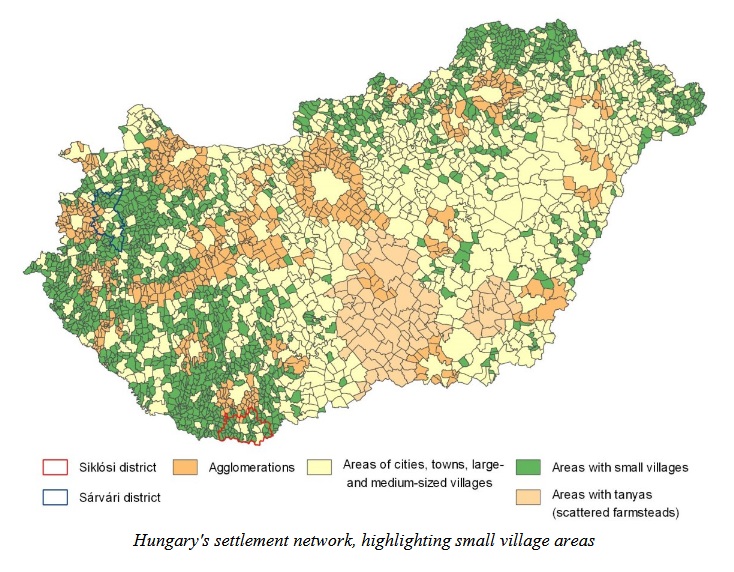
This article examines the different approaches to settlement success and municipal leadership in the case of Hungarian municipalities. Our objective is to examine mayoral perceptions of success in two selected districts in North and South Transdanubia and its underlying factors. Taking the concept of success used in Hungarian literature as a point of departure, the study compares the results of two primary data collections. By doing so, the paper exposes the key challenges facing rural development, the expectations of the population, and mayoral attitudes and motivations regarding development, as well as their varying interpretations thereof and efforts to achieve success at the local level. Drawing on research conducted in two districts in Transdanubia involving forty interviews, the paper seeks to highlight the differences between fundamentally similar areas dominated by small villages that arise from one being located in a peripheral southern county and the other in a northern, economically dynamic county. In addition to subjective factors of success, objective indicators will also be presented in order to illustrate the main trends of the economy and society.
This article is available in the Romanian Review of Regional Studies: Journal of the Centre for Regional Geography,
Keywords: regional development, rural development, success, local government, mayor